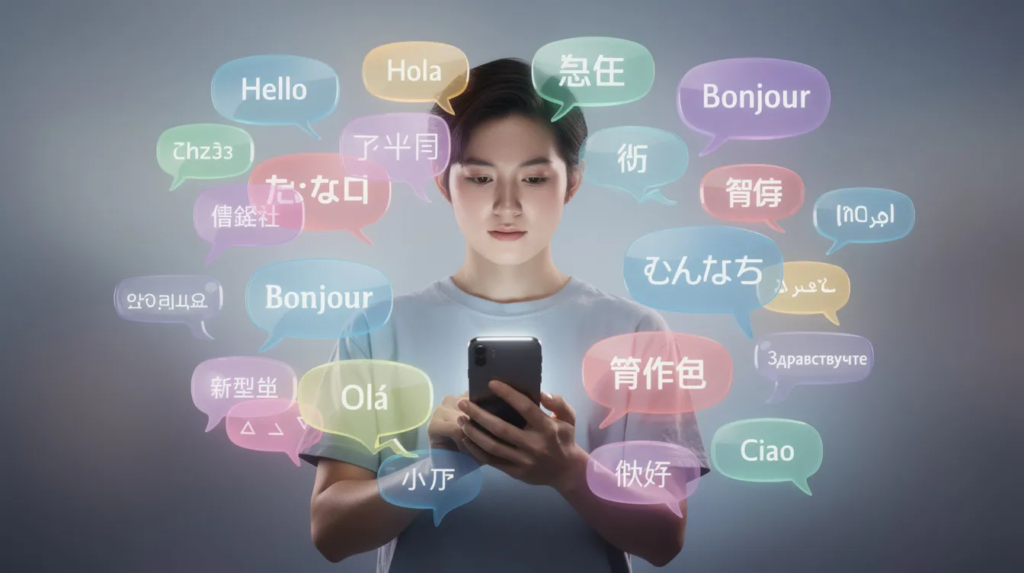
Phone calls across different languages used to mean awkward pauses, misunderstandings, or expensive interpreters. That era is ending. Real time call translation now makes it possible to have natural live conversations with anyone, anywhere, regardless of the languages you each speak.
What is real time call translation?
Real time call translation removes language barriers on phone calls by translating speech as people talk. Instead of waiting for someone to finish, then manually translating, the conversation flows naturally in both directions.
At its core, real time call translation is AI-driven, two way translation that happens during live conversations on regular phone calls or VoIP sessions. Real-time phone call translation uses AI technology to transcribe speech instantly and translate it verbally or into on-screen text, facilitating seamless multilingual communication during phone and video calls.
Unlike tools like Google Translate—which typically handle one speaker at a time with manual input—real time translation keeps both sides talking naturally with minimal pauses. The system recognizes language automatically and delivers translations as synthesized voice output in each person’s preferred language, on-screen captions, or both.
Common use cases include:
International business calls and negotiations
Customer support for global e-commerce
Travel bookings and emergency assistance abroad
Family calls between relatives in different countries
Communication for people with limited English proficiency
The technology has grown rapidly since around 2022, driven by breakthroughs in real time speech recognition and large language models. By mid-2025, Google reported over 100 million monthly active users of its Live Translate features, while carrier solutions like T-Mobile’s Live Translated calls processed millions of minutes during beta testing alone.
How real time phone call translation works (step by step)
Behind every translated call is a sophisticated AI pipeline that happens in milliseconds. Here’s how it breaks down in simple terms.
The basic process follows three stages:
Speech recognition – Your voice is captured and converted from audio to text using advanced AI models trained on a massive multilingual dataset
Machine translation – The text is translated between languages using neural translation engines that handle context, slang, and informal phrases
Text to speech – The translated text is converted back to natural sounding ai voices, often preserving the speaker’s tone and emotion
In a typical call, you speak into your normal phone number. Audio is routed through a translation service—either at the network level or in the cloud—and the translated response streams back to the other party. Modern systems using advanced ai can deliver translations with latency under 800 milliseconds per phrase.
Today’s technology handles overlapping talk, diverse regional accents, background noise, and mixed language speech far better than earlier generations. Some systems even offer custom voice output that approximates your own voice in the target language, making ongoing conversations feel more personal.
Network-level solutions build translation directly into the carrier infrastructure, while app-based or device-based options (like translator earbuds or an ai phone app) route calls through dedicated cloud services. For most users, no extra hardware is needed beyond a smartphone with a stable 4G or 5G data connection.
Key benefits: removing language barriers on everyday calls
The real power of live translation lies in its human impact. Families stay connected. Businesses expand. People navigate daily life without communication anxiety.
Seamless communication across borders
The primary benefit is breaking down language barriers so both parties can speak naturally in their native language. Many translation devices support two way voice translation, allowing users to speak in their native language while the other party hears it in their language instantly. You can talk freely without stopping to type into an app or pass a phone back and forth.
Support for limited English proficiency speakers
In the U.S., approximately 25 million people (8% of the population) have limited English proficiency. Modern AI-powered translation tools can provide rapid and context-aware translations, significantly improving the efficiency of global interactions compared to traditional methods that rely on human interpreters. A 2025 study found 87% improved satisfaction when patients used live translation for doctor calls versus ad-hoc interpreters.
Small business advantages
Companies can handle international calls without hiring full-time bilingual staff. One Shopify merchant reported handling 150% more Latin American calls after adopting voice translation, boosting revenue by 25% without new hires.
Travel scenarios
Travelers can book hotels, call taxis, translate menus, or request emergency help abroad while speaking in their own language. Data from Timekettle users shows 2x faster resolution for hotel bookings in Japan via earbud translation.
Accessibility
Live hands free translation supports speakers who find reading or typing difficult, including elderly users and those with dyslexia. On-screen captions also provide redundancy for clearer understanding.
Core features to look for in live call translation services
Not all translation services are equal. When choosing a translation service, key features to consider include language support, translation speed, and accuracy to ensure it meets specific needs.
Feature | What to look for |
|---|---|
Language coverage | Many real-time translation tools support over 80 languages, allowing users to communicate across diverse linguistic backgrounds without barriers. Strong solutions include local dialects, regional speech styles, and variants like British English vs. American English. |
Translation quality | Accuracy in handling nuance, slang, and emerging expressions matters. Look for tools that handle mixed language speech and informal phrases well, with smart dialect detection. |
Low latency | For natural conversation translation, translations should arrive within 1-2 seconds per phrase. Longer delays disrupt the flow of live conversations. |
Call types | Some tools work only for standard phone calls; others supports voice, video calls, and conference bridges. Check what your workflow requires. |
User experience | The best solutions require no extra logins, work with your existing phone, and let you save conversations or access all your past conversations later. Look for full call transcripts, automatic summaries, and the ability to view bilingual subtitles or live subtitles on screen. |
Compatibility | Supported languages should work across 4G LTE and 5G, on both iOS and Android. Ideally, the other party doesn’t need to install an app. Auto detection and auto identify features make setup easier. |
Privacy | Advanced translation devices can provide features like call captioning, which displays bilingual subtitles on screen during conversations, enhancing understanding—but verify how voice data is processed and stored, and whether you can access past conversations anytime without full recordings being kept by the provider. Key point highlighting and translation history features should respect data privacy. |
Real-world use cases and scenarios
Live translation shines brightest in specific, practical scenarios. Here’s how it transforms real life conversations.
Multilingual families
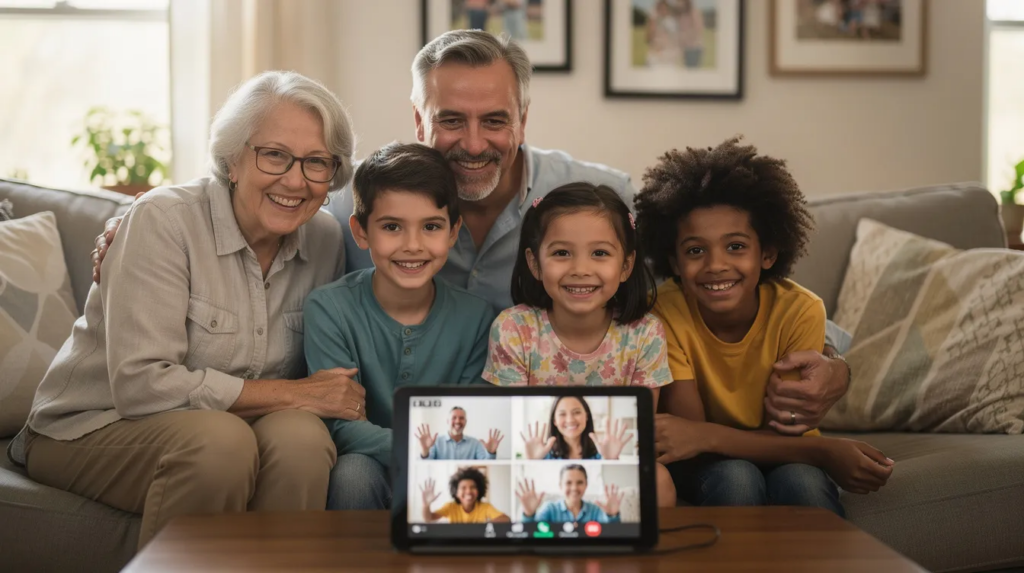
Cross-border calls between relatives who speak different languages become natural. T-Mobile users report 4x longer calls between U.S.-Asia family members, with natural speech patterns preserving emotional connection. A grandmother in rural Italy can hear her grandchild’s voice in synthesized Italian, maintaining bonds strained by distance.
Small businesses
A U.S.-based online retailer can field Portuguese inquiries from Brazil or Spanish calls from Mexico without a dedicated phone support team. One merchant using real time translation handled 150% more international calls, cutting interpreter costs by 70-90%.
Healthcare and education
Patients can explain symptoms for hospital visits to English-speaking doctors in their native language, reducing miscommunication. UK NHS pilots translated over 10,000 patient calls in 2025, reducing errors by 60%. Parents who speak Arabic or Spanish can conference with teachers without relying solely on children to interpret—important for sharing medical records or academic progress.
Travel and tourism
A traveler in April 2026 can call a hotel front desk abroad, make reservations, or resolve issues while speaking naturally. Global professionals can navigate local services without fumbling through phrase books. International students find it easier to arrange housing or banking.
Remote teams
Distributed teams across time zones use live translated calls for quick discussions instead of scheduling formal interpreted video calls. This cuts meeting prep time significantly.
Accessibility and inclusion
Immigrants, refugees, and newcomers navigate daily life services—from government offices to job interviews—without needing a third person for every call. A 2025 UNHCR study found 70% reported feeling more empowered using live translation for service navigation.

Real time call translation vs. apps like Google Translate
Many readers already know standalone apps like Google Translate. How does in-call live translation compare?
Google Translate excels at quick translation for phrases, text translation, and even photo translation—you can translate pictures, upload photos, or use smart ocr that extracts text from images. Its talk mode handles conversation but requires one speaker at a time and manual button taps.
In-call translation runs continuously in the background. Modern AI-powered translation tools enable rapid and context-aware translations, significantly improving multilingual communication compared to traditional methods. Both parties hear the conversation in their own language—not just a text transcript.
The convenience factor is significant. With real time call translation, callers stay in the dialer or native calling app rather than switching screens. There’s no need to pass the phone back and forth or juggle multiple apps during live conversations.
Some advanced solutions combine both: live voice translation during the call plus optional on-screen captions or transcripts saved afterward. Free translation apps may suffice for basic needs, but paid services generally offer enhanced features and superior performance, especially for professional use.
Google Translate remains an excellent baseline translation tool for travelers and casual use. For persistent, two way translation during real phone calls, dedicated call translation offers a smoother experience.
Types of solutions: network-level, apps, and devices
Several technical approaches exist for real time call translation. Each has trade-offs.
Network-integrated services
Carriers like T-Mobile build the translation feature directly into the phone network. Calls from any compatible phone number can use live translation with no extra app. Pros: zero setup, works with existing phones. Cons: limited to carrier-supported languages and routes.
AI phone apps
Solutions like Telelingo route calls through cloud-based translation services. Users install a dedicated app that handles call forwarding and translation. Pricing starts around $10/month for 80+ languages with wide app support. Pros: affordable, flexible. Cons: requires app installation.
Translator hardware
Devices like Timekettle W4 Pro earbuds ($300) or Vasco V4 ($400) pair with phones for both calls and in person conversations. Some offer offline capability. Pros: portable, works without data. Cons: battery limits, additional cost.
Enterprise platforms
Contact centers integrate real time translation into existing call routing and CRM systems. Platforms like KUDO or Interprefy support 100+ languages and let you set business hours for translation availability. Modern AI-powered translation tools can provide rapid and context-aware translations, significantly improving the efficiency of global interactions compared to traditional methods. Pros: scalable, professional. Cons: higher cost.
The most seamless experience typically comes from solutions that work with your existing phone translator behavior—dial a number, speak naturally, and let the technology handle the rest.
Getting started with live call translation today
Ready to try real time translation on your own calls? Here’s how to begin.
Identify your use case
Are you calling family abroad? Supporting international customers? Traveling? Your primary scenario shapes which solution fits best.
Check your current options
See if your carrier or communication provider offers built-in live translation. In 2025-2026, more providers are adding these enhanced features to standard plans.
Test quality
Make test calls in both directions using common phrases and a few complex sentences. Check how well nuance, tone, and informal phrases are preserved. A reliable 4G LTE or 5G connection provides the best experience with minimal lag.
Start small for business
Businesses should pilot with limited scope—one support line, one region—before rolling out to all agents or departments.
Look ahead
Real time call translation will continue improving rapidly. Experts predict support for 200+ languages by 2028, with accuracy approaching 90% across most pairs. Live multilingual phone calls are becoming as natural as local ones.
The technology that once seemed futuristic now fits in your pocket. Whether connecting multilingual families, growing a business, or navigating a new country, live translation makes the world a smaller, more accessible place—one call at a time.
Leave a Reply